Your Business Name
An outside pair of eyes, and something to do on Monday
 Photo: Felicity Tai / Pexels
Practical help for businesses and the people running them. You end each piece of work holding something you can act on, not a report.
What we do
01A second opinion
One decision, looked at properly, before it is made rather than after.
02* Working out what is wrong
Time with your people and your numbers, and an honest account of what we find, including the parts nobody enjoys hearing.
03Planning
Where the business is going, on a page or two short enough that people actually read it.
04Process and operations
The daily work mapped, simplified, and the steps nobody can explain removed.
05Pricing and margins
What each thing actually costs you to deliver, which is usually the most useful afternoon of the whole job.
06Coaching
Regular sessions for owners and managers who have nobody to think out loud with.
07Training
Practical sessions for teams, built around what they actually do, not a slide deck.
08Projects
Brought in to run something specific and hand it back finished and documented.
09Getting started
For new businesses: the decisions that are hard to undo later.
In a few words
Something to act on
Every piece of work ends with decisions and next steps, written down and short enough to be read.
A price, not a day rate
Agreed for the work, so thinking time is not a meter running.
Honest about fit
If this is not what you need, or you can do it yourselves, we will say so on the first call.
Plain words
No frameworks with invented names, and nothing you cannot repeat to your team.
 Photo: Nataliya Vaitkevich / Pexels
 Photo: Yan Krukau / Pexels
AboutMost problems are already known inside the business
The people doing the work usually know what is wrong. What is missing is somebody with no stake in the last decision, time to look properly, and permission to say the obvious thing out loud.
So the work starts with listening to the people who are not usually asked, and ends with a small number of changes you can actually make, in an order that makes sense.
Your Business Name
The work
Sessions, workshops and the whiteboards they end on.
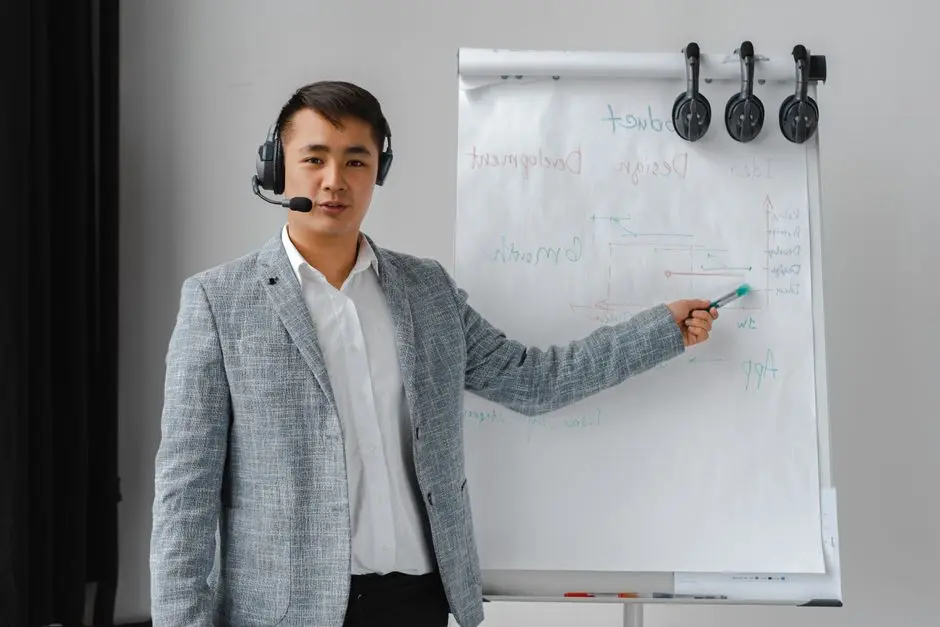 Photo: Mikhail Nilov / Pexels
01 / 04  Photo: Yan Krukau / Pexels
02 / 04  Photo: Pavel Danilyuk / Pexels
03 / 04  Photo: Pavel Danilyuk / Pexels
04 / 04
How an engagement runs
Short, defined, and finished with something you can act on.
- Step 01
A first call
What is going wrong, and whether we are the right people for it. Half an hour, no charge.
- Step 02
A written scope
What we will look at, who we need to talk to, how long it takes, what it costs and what you get at the end.
- Step 03
The work
Interviews with the people doing the job, a look at the numbers, and how things actually run rather than how the chart says they do.
- Step 04
Recommendations
What to do first, second and not at all — on one page, talked through with your team.
- Step 05
After
A check back a month later, because the value is in what actually changed.
Questions clients ask
What do I get at the end?
Decisions, next steps and whatever tools the job needs — written plainly and short enough to be used.
How do you charge?
A price for the work, agreed before it starts. Not a day rate that rewards taking longer.
How long does it take?
Most work is weeks, not months. If it needs longer, we will say so at the start.
Will you need to talk to our staff?
Usually, and it works better when they know why. What individuals say stays with us; what we report is what we found.
Do you work with small businesses?
Yes. Much of this matters more when there are five of you than when there are five hundred.
What if we could do this ourselves?
Then we will tell you that on the first call, and how. It costs us a job and saves you a bill.